The foremost reason to choose a tripod deer stand is because you need height, but have no trees in the right place to attach a stand to. While that is a compelling reason to get one, it isn’t the only time you might want to go with a freestanding deer stand. Browse through the list below to decide if it’s time for you to add a tripod to your arsenal this fall.
Further down you can also review what I believe are a few negatives of a tripod deer stand. Hopefully you’ll find all the information here that you need for deciding if a tripod is your best option or not.
10 Positives Of Tripod Deer Stands
- Tripods are freestanding
- 360 degree use, hearing and sight
- Comfortable
- A safe option
- Easy to camouflage
- Somewhat portable
- Fairly easy to set up
- Assorted heights are available
- Two-seater “quad pods” are an option
- Can be affordable
1. They Are Freestanding – No Need For Trees!
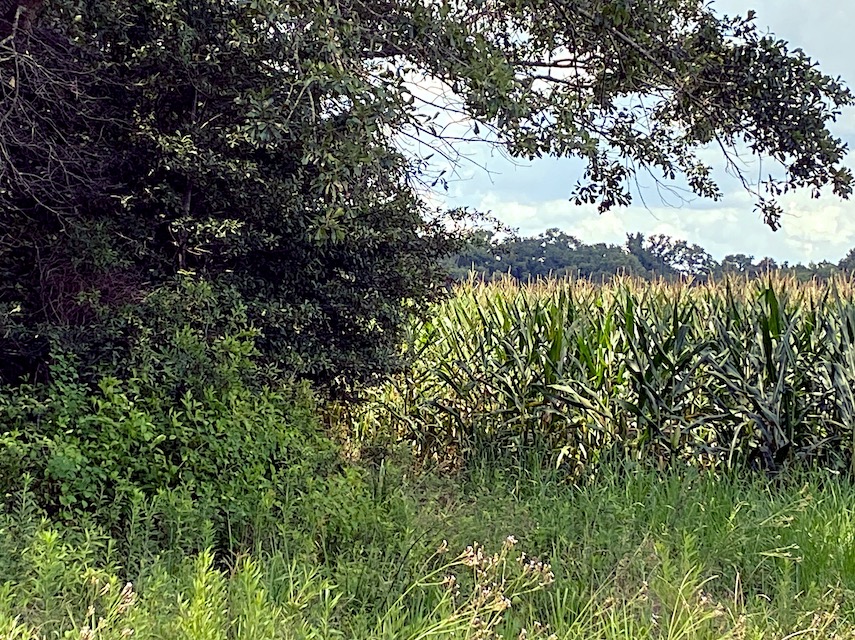
The best and most obvious benefit of a tripod deer stand is that they’re free standing. So, you don’t need an ideal tree in the ideal spot. Instead, just tuck your tripod amongst whatever cover you may have, whether it be young pines, a thick cedar, or perhaps a neighbor’s wood line.
You can even stick tripods out in the wide open, so long as you manage your movement while you’re in the stand. It does help to camo up the stand if possible, regardless of where you put it. More about that below.
2. 360 Degree Use, Hearing and Sight
A tripod allows for unobstructed 360 degree movement, hearing, and visibility. They are better in this regard than pretty much any other type of deer stand. Both box stands and ground blinds, in particular, are lacking in this department.
Most tripods will have a swiveling seat to further enhance your ability to effectively hunt your entire surroundings.
3. Comfort Level

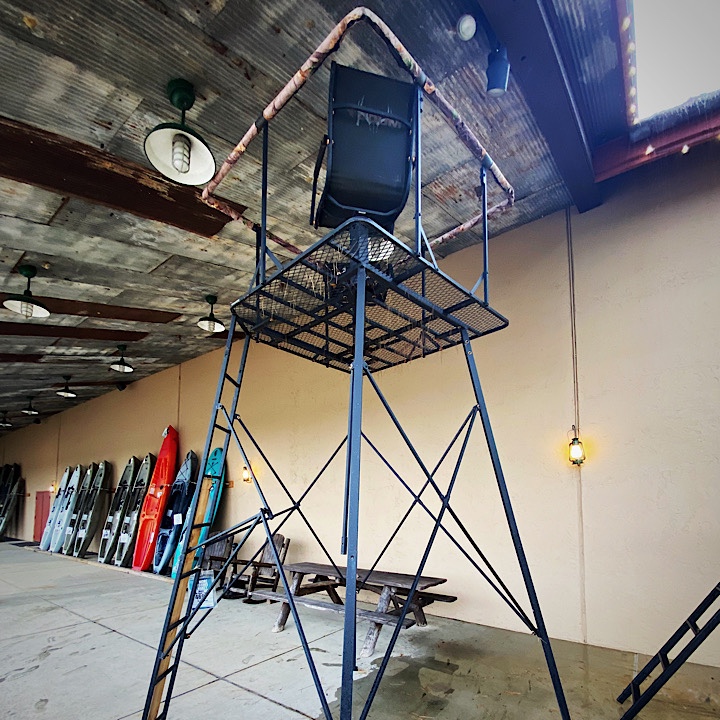
I prefer stands that have a mesh seat, as pictured above, as well as a surrounding rail. The rail serves as a nice gun prop for shooting deer, or for a secure place to rest your gun when not in use.
Mesh Seats
I believe my first experience with a mesh style seat was on a Millennium brand ladder stand. Since then I’ve become a huge fan of them. Mesh seats provide unparalleled comfort, so much so, that I have even added one to my boat. Mesh seats are surprisingly durable and a great option for a deer stand.
Safety Rail
I much prefer stands that have a surrounding rail, both for safety, as well as serving as a place to prop your gun. Some tripods even have a flip up front rail if you need that for bow hunting purposes. A flip up rail can also help when climbing into the stand. I leave the rail down on my tripod and attach burlap all the way around the stand for camouflage. Unless you’re quite a big guy, there is still room to comfortably climb into a stand like this without folding the front bar up.
Roof Kits
I suppose it’s the case with most deer stand styles, but you can typically add a roof kit to a tripod if you want protection from the rain.
All in all, I love tripod’s for their overall level of hunting comfort. Aside from an elevated box stand, I don’t think they can be beat.
4. Tripod Deer Stands (with a rail) Are Safe
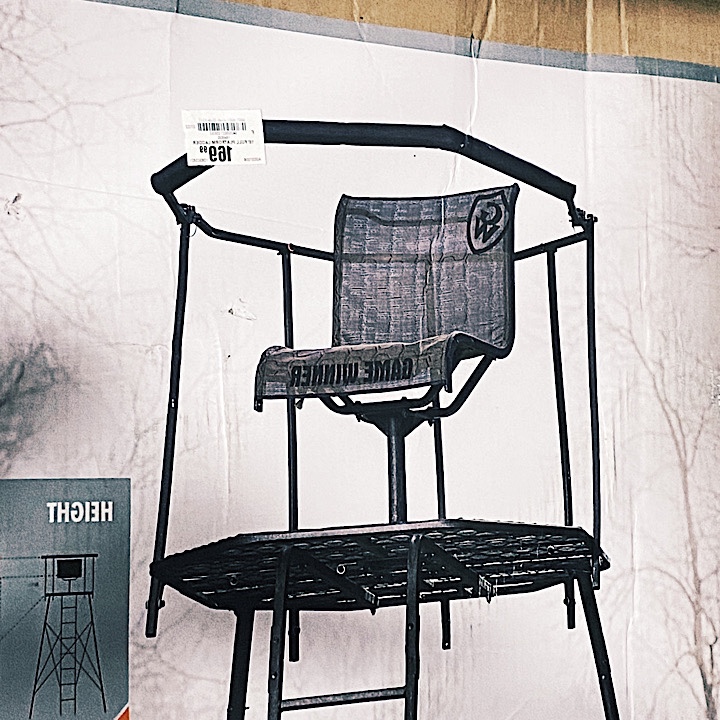
I have a tripod, like the one pictured above, which is about as small as I tend to go. These Game Winner tripod stands at Academy Sports and Outdoors are very affordable and actually quite comfortable. I like the rail to keep me securely in place when hunting.
For safety purposes, I prefer stands that have a true ladder attached to them, like in the picture below. This provides a sturdy and rigid climbing implement that often has a comfortable slant to it. I prefer a stand with a ladder over other options with climbing pegs.
I’m also a fan of freestanding deer stands that have a safety rail surrounding the hunter. Such a rail makes it nearly impossible to fall out of such a stand. For tall stands, you will need to be careful not to slip from the ladder as you climb.
Because tripods are usually firmly seated on the ground at 3 points there is very little risk of it falling when climbing or hunting. For additional safety, use a ground anchor to prevent a tripod from tipping over in high winds.
It’s important to use a Safety rope during the climb no matter what style of elevated stand you choose.
5.Easy To Camouflage

As already clearly stated, I recommend getting a tripod with a rail that surrounds the hunter at chest height. Not only does this provide safety and a great gun rest, it also serves as a great spot to attach camo.
As you can see in the image above, there are many attachment points on a tripod for burlap and brush. You can even construct a roof if you so desire.
I prefer to use a piece of camouflage material or burlap, in conjunction with brush from the surrounding area. I could have camouflaged this stand above far more, but it’s there year round and the deer totally ignore it.
6. Tripods Are Sort Of Portable
Ok, I get it. While not as portable as a lot of other deer stand options, they are far more portable than what I consider its closest brethren, the elevated box blind. When you sink a box stand into the ground, it’s nearly permanent.
A smaller tripod, like the 10 foot Game Winner stand above, and even larger tripods, are easy enough to move with the help of a utility trailer and an atv.
Fold Up Tripods
Some tripods, like the Big Game Pursuit at MidwayUSA and the Muddy Nomad are designed with portability in mind. Those have fold up legs, and are actually intended to be easily moveable.
7. Tripods Are Fairly Easy To Set Up
Most tripods require lining the pieces up accordingly and then assembling with a boatload of nuts and bolts. While not an especially quiet or quick task, it’s not very difficult. This is not a stealthy operation, so assembly and placement should be done prior to the start of the season.
You’ll usually need a buddy to help stand a tripod up after you put it together. You’ll also probably want to install a ground anchor to stabilize things and to keep it upright in strong winds.
Tripods are far easier to put together than if you were to construct an elevated box blind. In fact, with some modifications, you can nearly make one into an elevated blind.
TIP: Even though a stands instructions will usually say to use wrenches to assemble, I would use a cordless drill to speed things up. Sometimes there will be quite a few nuts and bolts to tighten down and a drill is a welcome tool to have.
8. Available In Many Heights
Tripod deer stands come in various heights from 6 foot to maybe 16 foot or so. Most will be a fixed height, but some do offer extension kits which can raise them up another 4 feet.
If you’re one of those hunters that like to get way up in the air, over 20 feet, then maybe tripods aren’t your answer. Then again, it’s hard to have any freestanding option that gets you that high up.
Be sure you understand how the height of the stand is measured for the particular model, before you purchase it. Sometimes they measure to the floor vs to the rail. This makes quite a difference in the stated height.
9. Two Seater “Quad Pods” Are Available
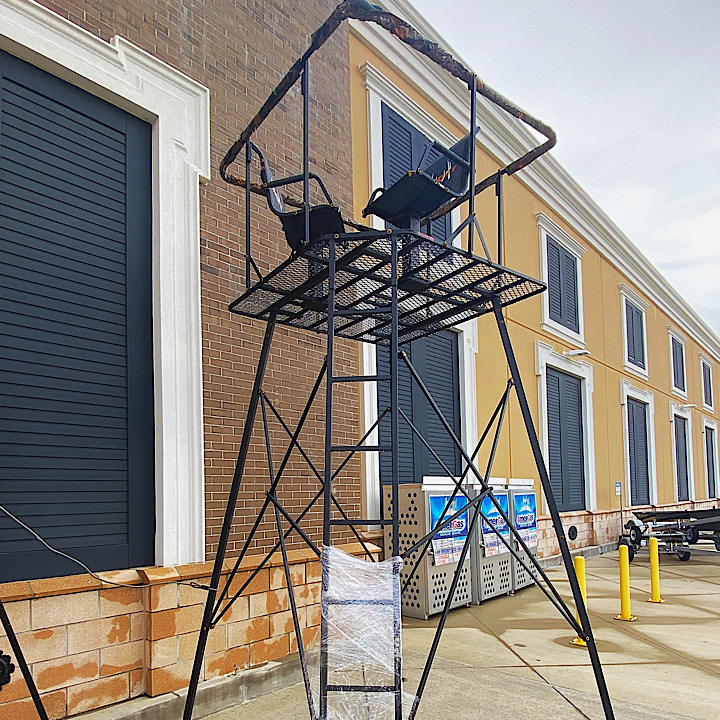
There are actually “quad pod” deer stands (4 legs) that allow for 2 hunters in the same stand. Some ladder stands also offer this feature. If you have a need for a 2 seater deer stand, you shouldn’t rule out tripods. These larger quad-pod stands make tripods great for hunting with kids.
10. Affordability
You can find various models of tripods at Bass Pro, Academy, Amazon, Tractor Supply, Sportsman’s Guide and other outdoors retailers. All in all, a tripod can go for anywhere from $150 to upwards of $1000 for a premium model.
Being a budget minded hunter, I like the ones at Academy with the comfy mesh chairs. In 2022 you could get one for around $170 plus tax.
In popular hunting areas, there are usually small local shops that sell stands not available at the chain stores referenced above. It’s worth driving around to see what might be available locally before ordering something.
6 Negatives Of Tripod Deer Stands
To be fair, there are some negatives to tripod stands. Below are the ones that I could think of.
- Tall tripods are heavy
- Not good on steep terrain
- Loud to setup
- Height is not usually adjustable
- Strong winds can blow them over
- They can be noisy
Tall Tripods Are Heavy
These days I hunt out of relatively short tripods, but I have had a really tall one in the past. Those big ones can be a bear to stand up. For tall stands you’ll definitely need some assistance to get them in the air. You’ll also want a ground anchor to keep it firmly in place.
SOLUTION: Call a buddy to help you put the stand up.
Not Good On Steep Terrain
While you could dig out a hole to level up a tripod on very uneven terrain, usually there are better stand options.
Assuming you don’t have any trees to attach a stand to, you could always consider a ground blind. If you do still want a tripod, there are some options that have adjustable legs. This will help you account for some unevenness of the ground.
Loud Setup
Tripods are much louder to set up than some other deer stand options. Typically, you would erect such a stand prior to the season. It’s certainly not the greatest option for covert in-season setups.
Height Is Not Adjustable
Most tripod stands are not adjustable in height, so you’ll want to be sure you purchase the height you want. While that’s often true of ladder stands as well, sometimes you can remove a section of a ladder stand to adjust the height. Obviously climbing stands and loc on’s let you change heights as well.
If height flexibility is a concern, then perhaps a tripod isn’t for you. As with everything, there are exceptions though. Some tripods do actually have extension kits that will raise them up another 4 feet.
High Winds Can Topple A Tripod
I know first hand how a tripod stand can blow over. One year I installed a 10 foot tripod on a hilltop ahead of the season. It was kind of a rush job, so I didn’t bother to anchor it down. I wrapped it in burlap to camo myself, thus creating a nice wind catch. When I sneaked in to hunt the stand on opening morning of deer season, it was sitting on it’s side!
SOLUTION: Anchor your tripods, especially if they sit on a windy hilltop! There are many ways to anchor a deer stand. You can buy anchor kits just for this purpose, or you can drive stakes into the ground and attach the feet to that. There are many options.
They Can Be Noisy
Tripods usually have a swivel seat. The pedestal connection below the seat can sometimes start squeaking. Also, any stand constructed with an expanded metal floor, whether that be a ladder stand, climber, or tripod, can have a floor that pops when standing and moving around. Typically that happens on stands that are cheaply constructed. I would read reviews to make sure you’re getting a quality item.
SOLUTION: Use petroleum jelly or some other unscented lubricant on seat pedestals to prevent squeaking. I keep a small container in my hunting pack just in case.
Conclusion
Tripods are one of my very favorite styles of deer stand. They’re free-standing, comfortable, safe, and fairly portable. I find that their positives far outweigh any negatives. Head over to Bass Pro Shops, Academy Sports, or one of the other retailers mentioned above to see their selection of tripods.
Happy Hunting!
Augustus Clay